
The Challenge
Designing a dedicated space for the gaming community carries a specific responsibility: the interface must organize massive amounts of technical data without overwhelming the aesthetic experience. The challenge was to create a "digital library" that felt both like a professional database and a high-end social network. The complexity lay in balancing very diverse content formats: data-heavy game pages with multi-platform metadata, immersive full-screen cover art, and a social feed that handles everything from 100-word reviews to instant news updates. I needed to create a visual hierarchy that would allow the user to seamlessly shift their mindset—from a librarian managing a 300-game backlog to a critic engaging in community debates—maintaining aesthetic coherence through a "Premium Dark" design language that allows the vibrant game art to take center stage.
The Build
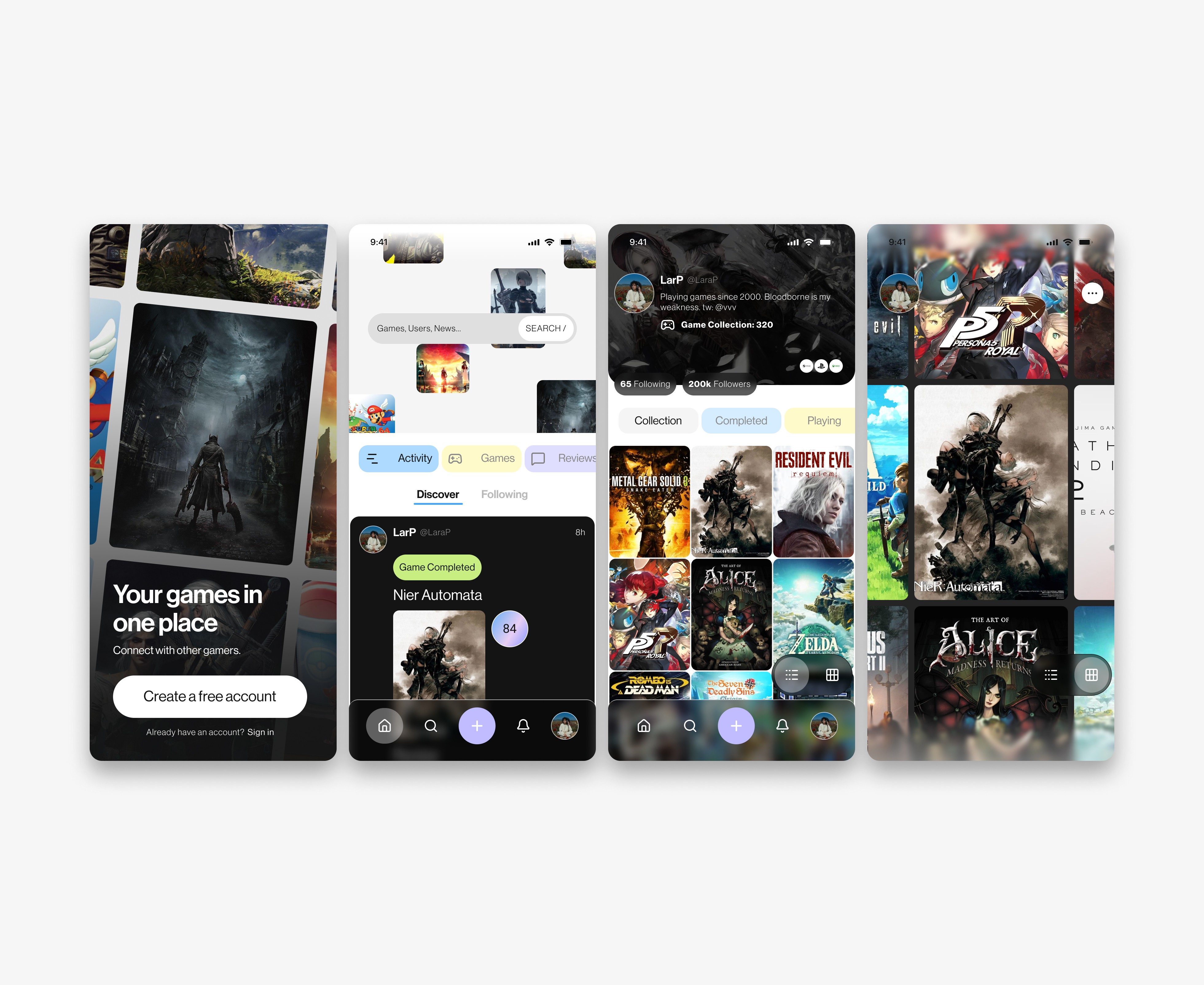
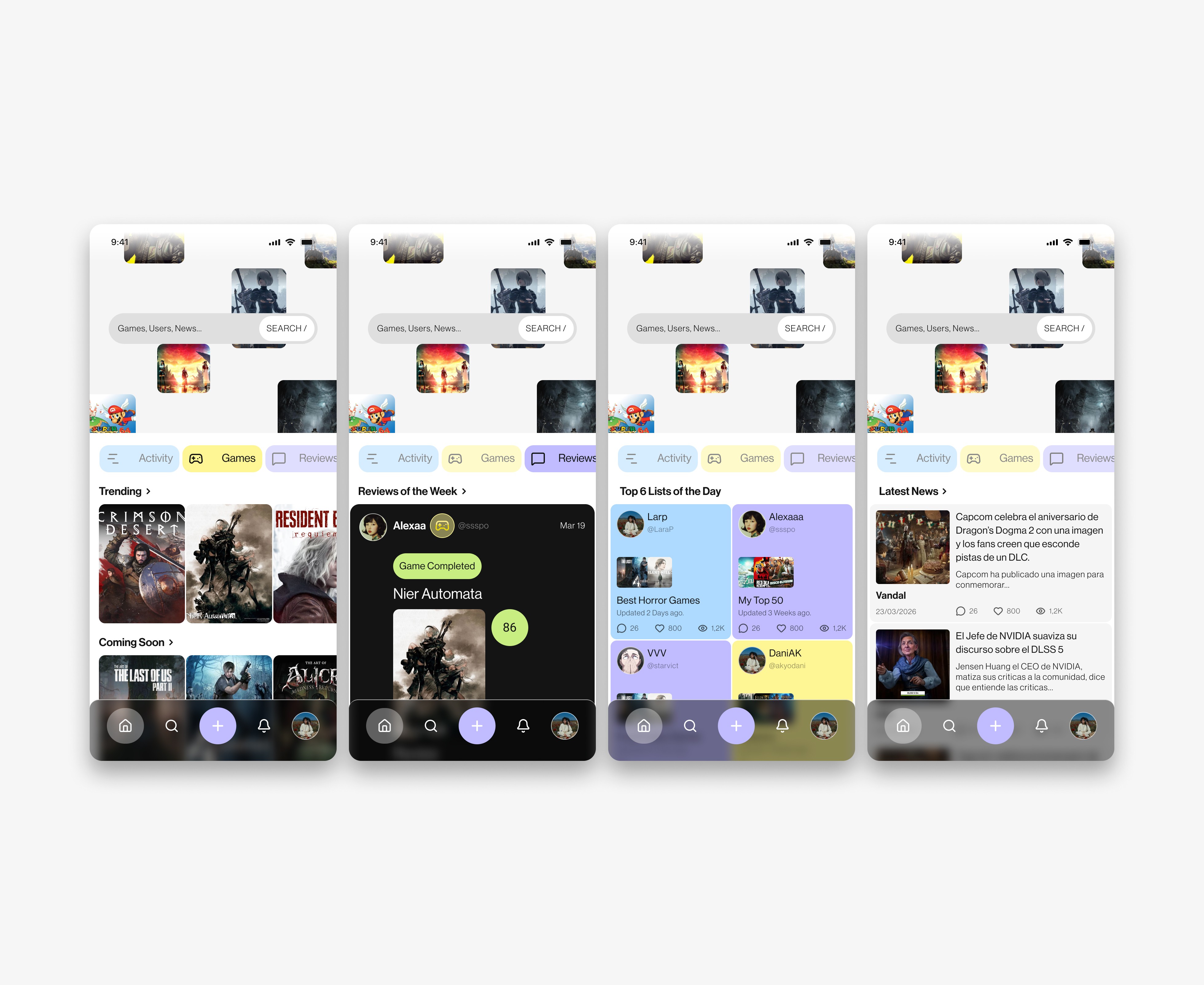
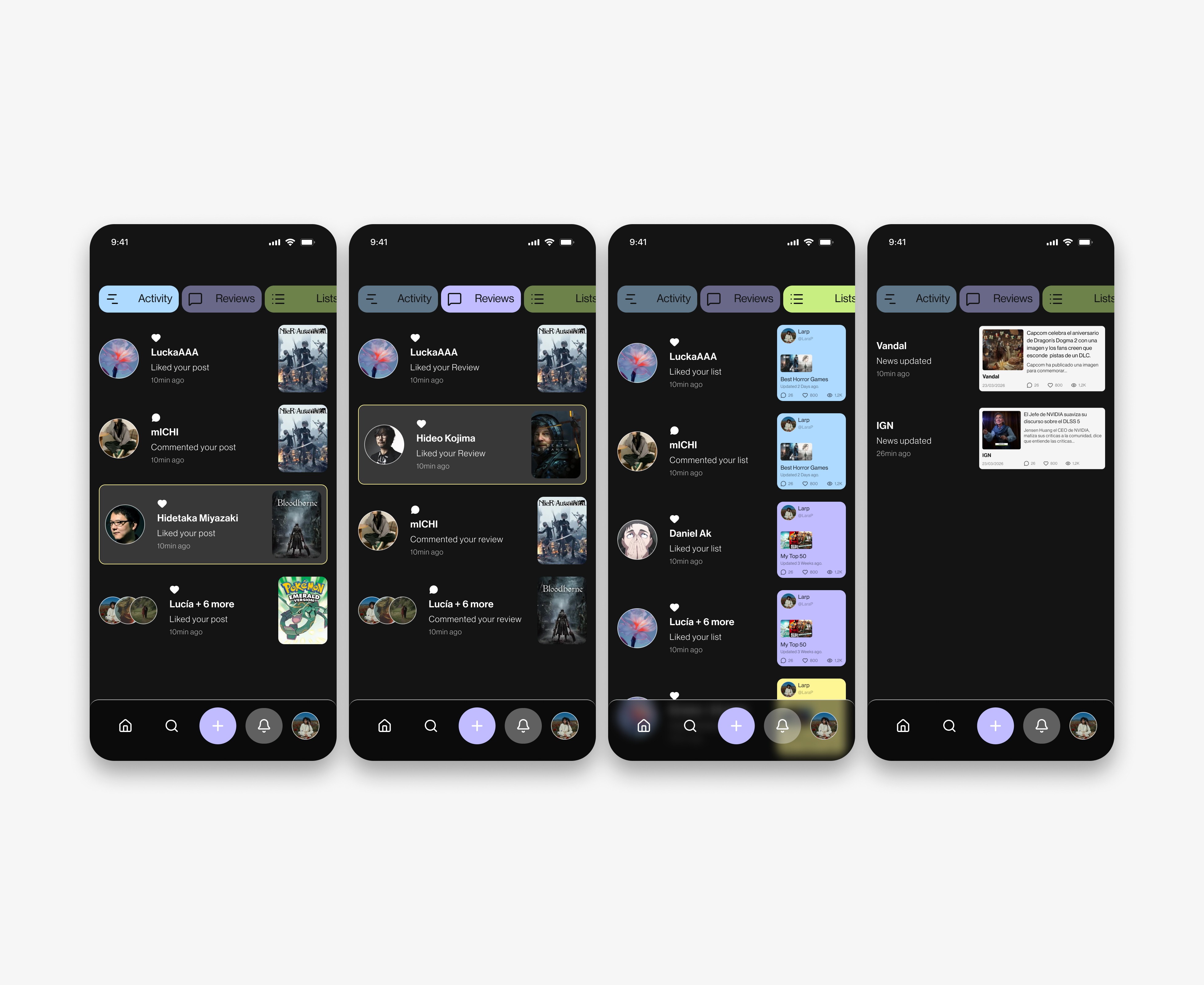
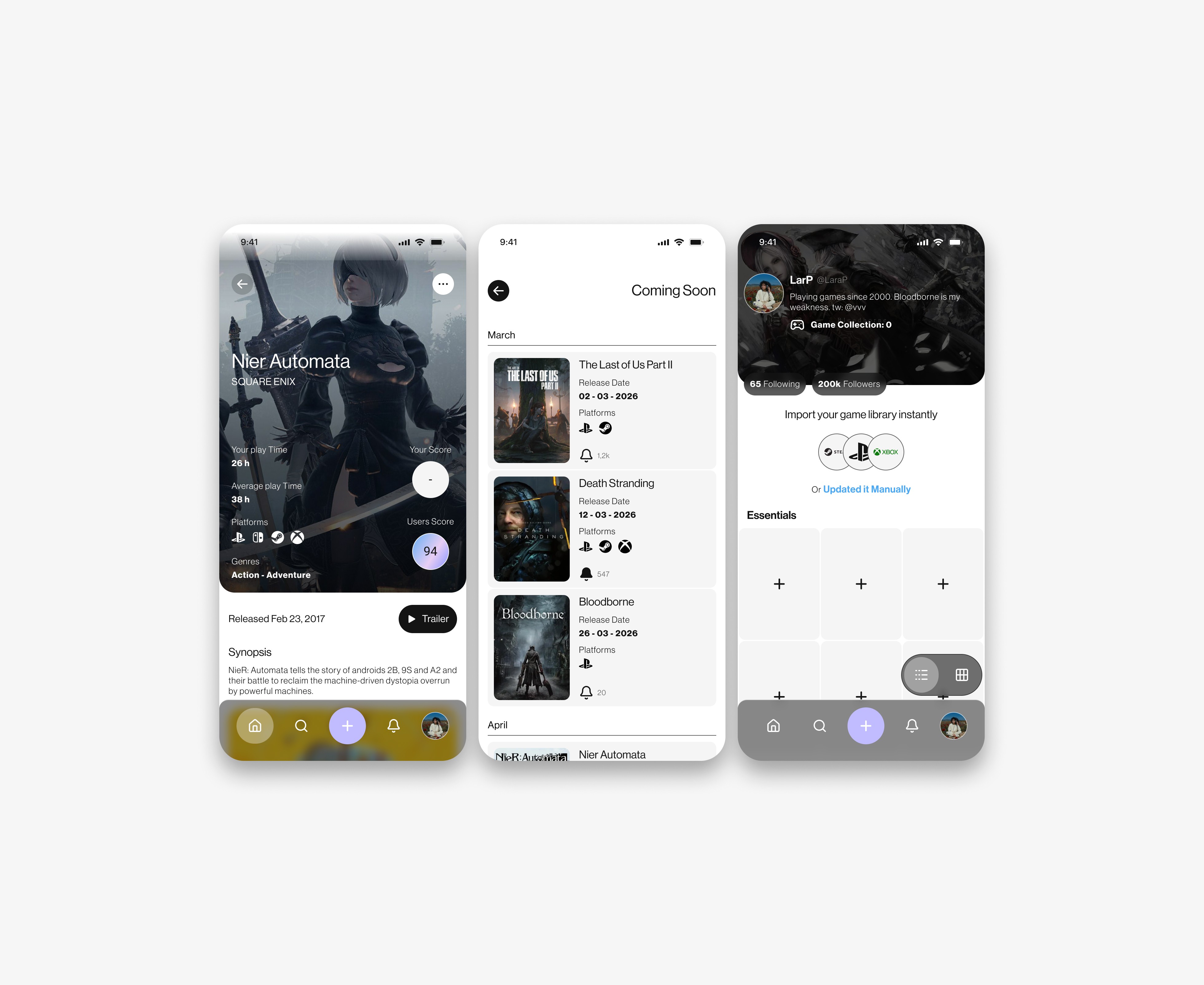
To organize this large number of functionalities, I designed a context-based information architecture in Figma centered on the player's identity and data discovery. Immersive Discovery Feeds: I visually differentiated social activity from catalog browsing. While the "Inmersive Mode" prioritizes full-screen artistic visuals for game exploration, the "Activity Feed" uses structured, color-coded cards to facilitate quick reading of community ratings and play statuses. Unified Library Sync: I designed a seamless onboarding flow to integrate external APIs (Steam, PSN, Xbox) into a unified user profile. This allows for an instant library build-up, displaying playtimes and collection sizes without manual friction. Status-Driven Micro-interactions: I implemented a specialized tagging system (Playing, Completed, Dropped) integrated directly into game pages. This allows users to update their progress and personal scores with a single tap, fostering a real-time "Gaming Journal" experience. Authority-Based Hierarchy: I developed a "Golden Controller" verification system and specialized notification borders. This visually highlights interactions from industry legends or verified media, ensuring that high-value community insights stand out within the social ecosystem.

" height="2.1187359513420594px" id="P5kIJB7Ko" transform="translate(4.268 0)" width="11.73219480873486px"/><path d="M 2.13 11.637 L 0 11.637 L 0 0 L 2.13 0 Z" fill="rgb(15, 14, 14)" height="11.636652122173734px" id="xBplekXaY" transform="translate(13.87 0)" width="2.1296344887445002px"/><path d="M 1.509 14.942 L 0 13.447 L 13.563 0 L 15.073 1.496 Z" fill="rgb(15, 14, 14)" height="14.94221869628454px" id="DEz5S9WYM" transform="translate(0 1.058)" width="15.072818848944806px"/></g></svg>)